

Furniture Repair in the Modern Day: The Value of Craftsmanship, Sustainability and Longevity
In a world increasingly driven by convenience, mass production and disposable consumer goods, the art of furniture repair has taken on a renewed significance. While modern manufacturing has made furniture more accessible than ever, there is a growing appreciation for the quality, character and longevity of older pieces. Furniture repair is no longer simply about restoring something that is broken; it is about preserving craftsmanship, extending the life of materials and recognising the enduring value of well-made objects.
For traditional workshops and skilled craftspeople, furniture repair represents a meeting point between historic techniques and modern expectations. It is a discipline that requires patience, experience and an understanding of materials, but one that continues to evolve alongside contemporary lifestyles.
A Changing Attitude Towards Furniture
For generations, furniture was often made with the intention of lasting for decades, if not centuries. Solid timber, traditional joinery and carefully considered construction allowed pieces to withstand everyday use and, where necessary, be repaired and maintained over time. Furniture was frequently regarded as a long-term investment, with pieces passed between generations and adapted to suit changing homes and tastes.
Today, the furniture market is considerably different. Mass production, lower-cost materials and changing consumer habits have contributed to a culture in which replacing furniture can sometimes seem easier than repairing it. Flat-pack construction, engineered boards and synthetic finishes have introduced new challenges for traditional repair methods, and not every modern piece is designed with repairability in mind.
Despite these changes, attitudes are beginning to shift. Greater awareness of sustainability, a renewed interest in traditional interiors and an appreciation for individuality have encouraged many people to reconsider the furniture they already own. Rather than automatically replacing a damaged or worn piece, homeowners are increasingly exploring the possibility of repairing, restoring or adapting it.
This change reflects a broader recognition that furniture can have value beyond its original purchase price. Sentimental attachment, quality of construction, distinctive design and the history associated with a particular piece can all make repair a worthwhile consideration.
The Importance of Traditional Craftsmanship
At the heart of furniture repair is an understanding of how furniture is constructed and how its materials behave over time. Wood responds to changes in temperature and humidity, joints can loosen through years of use, finishes deteriorate and surfaces accumulate the marks of everyday life. Successfully addressing these issues requires more than simply making a piece look new again.
Traditional woodworking skills remain fundamental to high-quality furniture repair. Techniques such as joint reconstruction, veneer repair, carving, surface preparation and French polishing require a detailed understanding of both materials and methods. The craftsman must be able to identify the original construction, assess the extent of any damage and determine the most appropriate approach to repair.
Equally important is knowing when not to intervene. Not every scratch, mark or sign of age needs to be removed. In many cases, the natural patina developed over decades contributes to the character and authenticity of a piece. A sensitive repair respects these qualities, addressing structural problems and significant deterioration without unnecessarily removing the evidence of the furniture's history.
The distinction between repair and complete restoration is particularly important. Repair often focuses on resolving specific areas of damage or wear while retaining as much of the original material and finish as possible. Restoration may involve more extensive work to return a piece closer to a previous appearance or condition. The appropriate approach depends on the furniture itself, its intended use and the owner's expectations.
The skill lies in achieving a balance between practical function, visual appearance and the preservation of original craftsmanship.
Sustainability and the Repair Economy
One of the most relevant aspects of furniture repair in the modern day is its relationship with sustainability. The manufacture of new furniture requires raw materials, energy, processing and transportation. When furniture is discarded prematurely, valuable resources are lost and additional waste is generated.
Repair offers a practical way to extend the useful life of existing furniture. By addressing structural faults, replacing damaged components where appropriate and renewing worn surfaces, a skilled craftsperson can often make a piece suitable for many more years of use.
This approach aligns with the principles of a circular economy, in which products and materials are kept in use for as long as reasonably possible. Furniture repair can reduce the demand for replacement products and help limit the volume of usable furniture sent to landfill or other waste streams.
However, sustainability is not simply a matter of repairing everything. The materials, adhesives, coatings and replacement components used during a repair also have an environmental impact. A considered approach takes these factors into account, prioritising suitable, durable materials and avoiding unnecessary intervention.
For consumers, choosing to repair can also encourage a more thoughtful relationship with the objects in their homes. Furniture becomes something to maintain and care for rather than something to replace whenever its appearance changes or minor damage occurs.
Modern Materials, Modern Challenges
While traditional furniture repair techniques remain highly relevant, the modern workshop must also adapt to the materials and construction methods used in contemporary furniture.
Solid timber furniture can often be repaired using established woodworking methods, but engineered boards, laminates, composite materials and modern synthetic finishes can present different challenges. Some surfaces are difficult to refinish, certain joints are not designed to be dismantled, and replacement components may be unavailable or uneconomical to produce.
Modern finishes, including lacquered and sprayed coatings, may also require specialist knowledge and equipment to repair successfully. Matching colour, sheen and texture can be particularly demanding, especially where the original finish has changed over time through exposure to light and everyday use.
In addition, contemporary furniture often combines different materials within a single piece. Timber may be used alongside metal, glass, plastics or upholstered elements, requiring a broader understanding of materials and, in some cases, collaboration between different specialists.
These challenges reinforce the importance of assessment before work begins. A repair that appears straightforward on the surface may conceal structural damage or previous unsuccessful interventions. Understanding the original construction and selecting an appropriate repair method are essential to achieving a durable result.
The Role of Technology in the Modern Workshop
Although furniture repair remains a fundamentally hands-on discipline, technology has introduced useful developments into the modern workshop.
Advances in adhesives, precision tools, colour-matching systems and finishing products have expanded the range of repairs that can be undertaken. Improved lighting, digital photography and documentation also allow craftspeople to record the condition of a piece, monitor progress and communicate more effectively with clients.
Computer-aided design and digital fabrication can be particularly useful when replacement components are required. Where appropriate, these technologies can assist in reproducing missing or damaged elements, although the final result still depends on a thorough understanding of the furniture's original construction and aesthetic.
Technology can support traditional craftsmanship, but it does not replace the judgement and experience required to make good repair decisions. The ability to assess wood movement, recognise a failing joint, work delicately with fragile veneer or achieve a sympathetic finish is still developed through practical experience.
The modern workshop is therefore not a choice between traditional methods and new technology. It is an environment in which both can complement one another, allowing established skills to remain relevant while responding to changing materials and expectations.
Preserving Character and History
Furniture often carries a significance that extends well beyond its practical function. A dining table may have been central to family life for generations, a cabinet may have been inherited, or a chair may hold memories of a particular home or period.
This emotional and historical value can make furniture repair particularly rewarding. Restoring the stability of a well-used table or carefully repairing a damaged cabinet allows an object to remain part of someone's everyday life, rather than becoming simply a reminder of the past.
Antique and period furniture presents an additional responsibility. Original materials, construction details and finishes can provide valuable insight into the methods and aesthetics of the time in which a piece was made. Unnecessary alterations may diminish these qualities, which is why conservation-led approaches often prioritise minimal intervention and the retention of original material.
The aim is not always to make an antique look untouched or newly manufactured. Instead, it is often to stabilise, preserve and improve its condition while retaining the signs of age that contribute to its identity.
This philosophy is equally relevant to more recent furniture. A well-designed modern piece may possess distinctive construction or material qualities that are worth preserving, even if it does not have the historical significance of an antique.
Repair as an Investment
The cost of furniture repair is an important consideration for any owner. In some cases, a straightforward repair may be a practical alternative to purchasing a replacement. In others, particularly where extensive structural damage or complex restoration is involved, the work may represent a significant investment.
The decision depends on several factors, including the quality and construction of the furniture, the extent of the damage, the availability of materials, the labour required and the importance of the piece to its owner.
A professional assessment can help establish what is realistically achievable and whether repair is appropriate. It also provides an opportunity to discuss the intended use of the furniture, the desired appearance and the level of intervention that makes sense.
Importantly, the value of repair cannot always be measured financially. Sentimental attachment, rarity, craftsmanship and the desire to retain a particular piece within a home may all justify work that would not necessarily be economical based on resale value alone.
A well-considered repair can offer something that a new purchase cannot: the continued use of an object with its own identity, history and character.
The Future of Furniture Repair
As consumer attitudes continue to evolve, furniture repair has an important role to play in shaping a more sustainable and considered approach to interiors. Interest in traditional craftsmanship, handmade objects and the reuse of existing materials provides opportunities for skilled workshops to share their knowledge and demonstrate the value of their work.
There is also an important role for education. Helping people understand how furniture is constructed, how materials age and how routine maintenance can prevent deterioration may encourage earlier intervention and reduce the need for more extensive repairs later on.
For younger generations of craftspeople, furniture repair offers a practical way to develop a wide range of skills. It combines woodworking, material science, problem-solving and an appreciation of design and history. Passing these skills on is essential to maintaining a body of knowledge that has been developed and refined over many generations.
The future of the industry will depend in part on how successfully traditional expertise adapts to contemporary materials, changing consumer expectations and new approaches to sustainability. The underlying principles, however, remain remarkably consistent: understand the material, respect the original construction and carry out work with care and purpose.
The Value of Making Things Last
In the modern day, furniture repair represents much more than the correction of damage. It is an opportunity to preserve craftsmanship, reduce unnecessary waste, retain personal and historical connections and make better use of the resources already available to us.
For the skilled craftsperson, every piece presents its own set of challenges and opportunities. No two repairs are exactly alike, and the process demands a combination of technical knowledge, practical ability and considered judgement.
As the appeal of quality, longevity and individuality continues to influence how people furnish their homes, the importance of furniture repair remains clear. While materials and techniques may change, the value of careful workmanship endures.
Ultimately, repairing furniture is about recognising that not everything needs to be replaced. With the right knowledge, materials and approach, many pieces can continue to serve their purpose, retain their character and be appreciated for generations to come.
At its best, furniture repair brings together the experience of the past and the needs of the present, ensuring that good design and skilled craftsmanship continue to have a place in modern life.
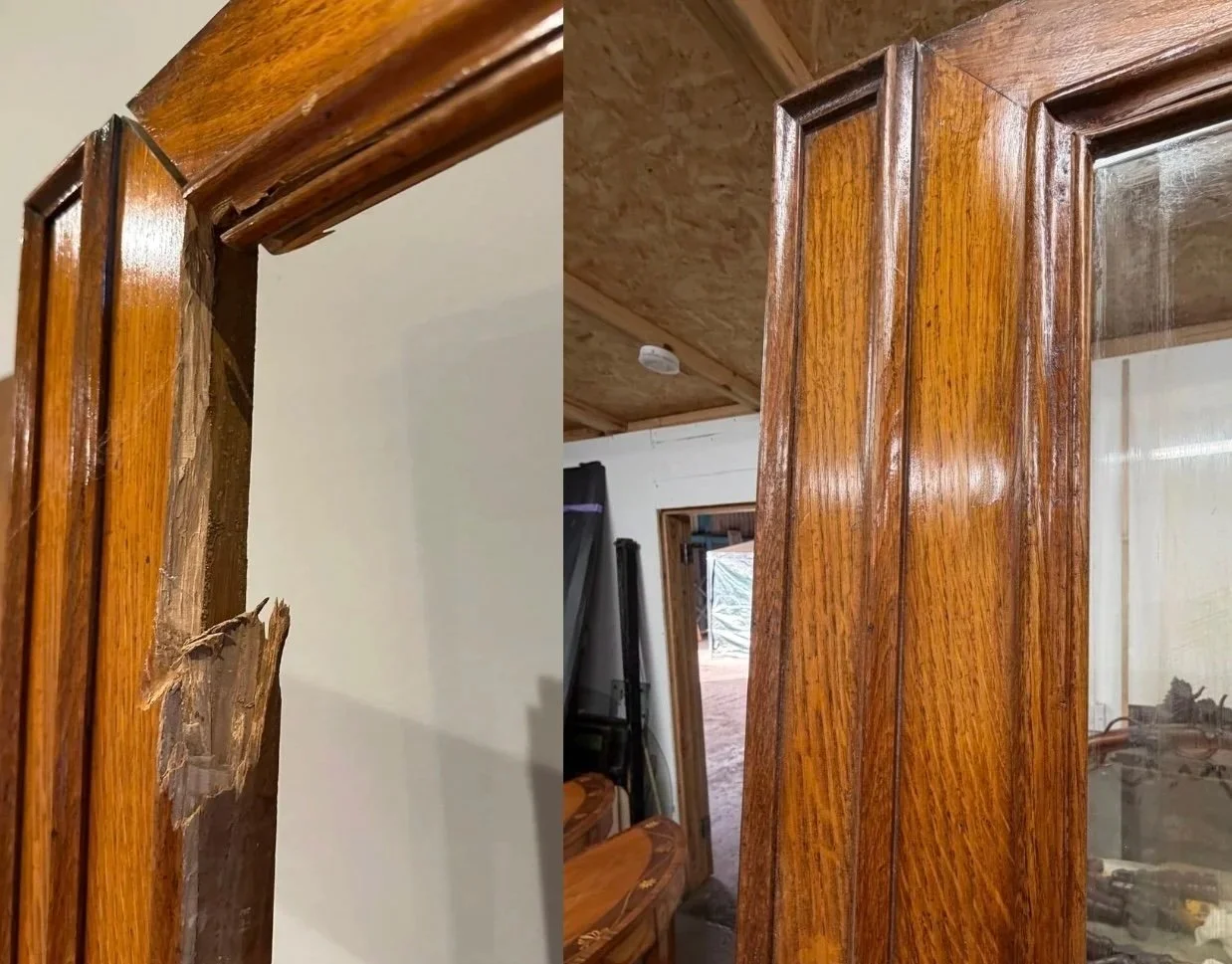
Internal glazed door repair