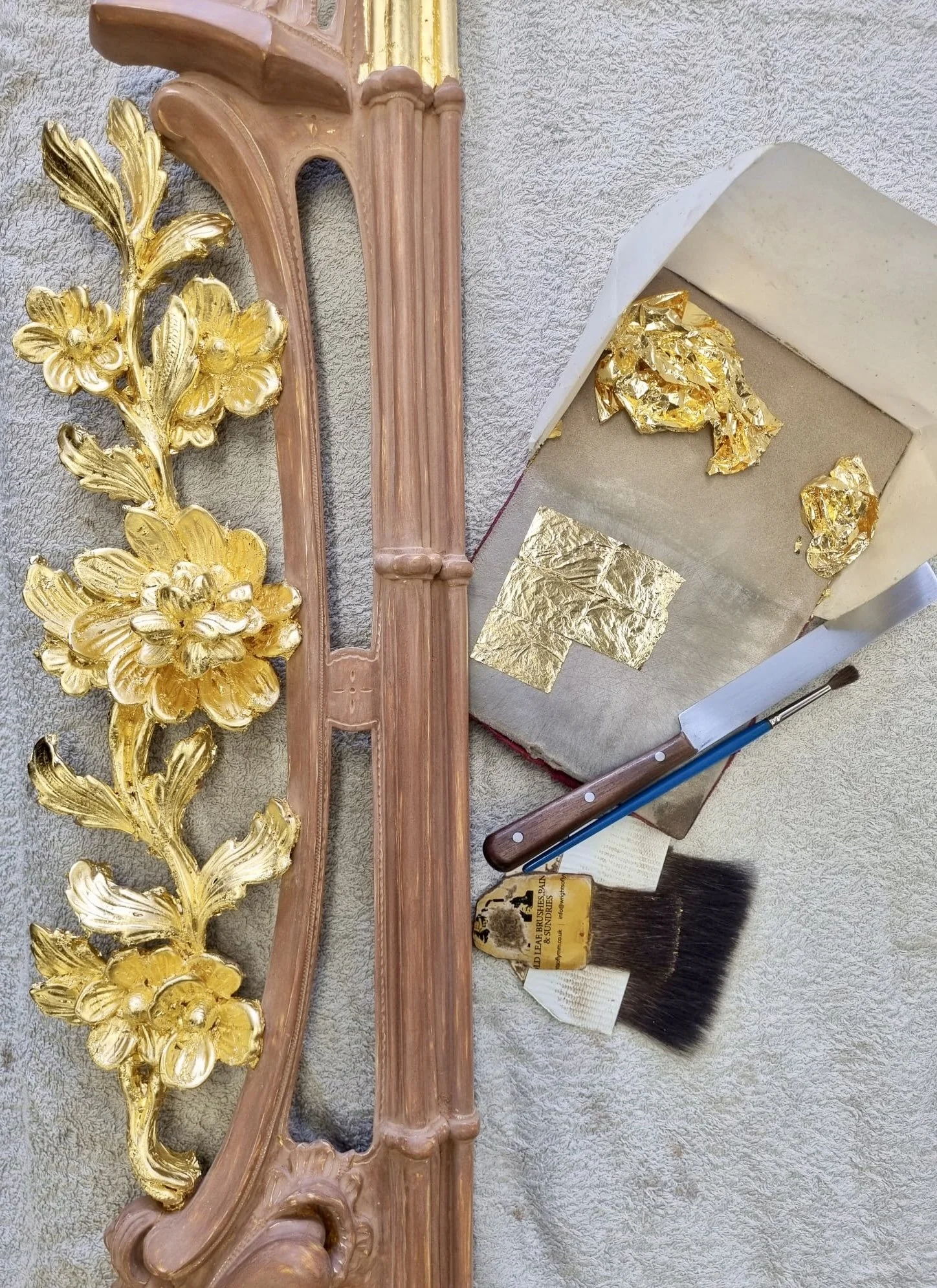

The Timeless Art of Gilding: Preserving Beauty Through Traditional Craftsmanship
Gold has captivated people for thousands of years. From the ornate frames surrounding Old Master paintings to the decorative mouldings of stately homes, gilding has long been associated with luxury, craftsmanship and prestige. Yet, despite its opulent appearance, gilding is as much about skill and precision as it is about precious materials.
At Butler & Castell, we believe that understanding traditional craftsmanship helps us appreciate the remarkable objects that have survived through the centuries. Whether restoring an eighteenth-century mirror or conserving a Victorian picture frame, gilding remains one of the most fascinating and rewarding disciplines within antique restoration.
What is Gilding?
Gilding is the process of applying an extremely thin layer of gold leaf to a prepared surface. Gold leaf is so fine that a single gram of gold can be beaten into a sheet covering almost one square metre. Once applied, it creates the rich, luminous finish that has adorned furniture, mirrors, architectural features, sculptures and works of art for centuries.
Although genuine gold leaf is the traditional and preferred choice, modern gilders may also work with silver leaf, aluminium leaf or imitation gold leaf, depending on the object and its intended use.
A Craft with Ancient Origins
The history of gilding stretches back over 5,000 years. Ancient Egyptian craftsmen decorated sarcophagi and temples with gold, while the Greeks and Romans refined gilding techniques for sculpture and architecture.
During the medieval period, gilding flourished across Europe, becoming an essential feature of churches, illuminated manuscripts and religious iconography. By the Georgian and Victorian eras, beautifully gilded mirrors, clocks, furniture and picture frames had become symbols of refinement within the home.
Many of these pieces survive today, but after centuries of wear, exposure to sunlight, fluctuating humidity and accidental damage, careful restoration is often required.
Water Gilding vs Oil Gilding
There are two principal methods of traditional gilding, each suited to different applications.
Water Gilding
Water gilding is regarded as the highest standard of decorative gilding. The surface is built up using layers of traditional gesso and bole before the gold leaf is carefully floated onto the prepared surface using water.
Once dry, the gold can be burnished with an agate stone to create an exceptional mirror-like shine that simply cannot be replicated with modern paints or metallic finishes.
Water gilding is commonly found on:
Antique mirrors
Picture frames
Carved furniture
Ecclesiastical objects
Museum-quality restoration projects
Gessoing: Multiple layers of "traditional gesso" (a plaster-like mixture of rabbit skin glue and whiting) are brushed on to smooth out the wood grain. This is then sanded and cut up to create deatil and perfectly smooth surface.
Bolesing: A layer of "bole" or “gold size” (a fine, smooth clay mixture, in varied shades colored red, brown, or blue) is painted over the gesso. This colored clay not only provides a warm undertone to the gold but also acts as a cushioned bed for polishing. Colour is relevant to the period in history.
Gilding: The gilder wets the clay with a "gilding water" (a mix of size, water and a tiny bit of alcohol). The delicate gold leaf is swiftly laid onto the wet surface where it is sucked down and bonded.
Burnishing: Once dry, the gold is rubbed with a polished agate stone to compact the leaf and bring out a highly reflective, mirror-like shine on selected areas.
Finishing: The gold is then toned, aged and distressed to the desired finished result.
Oil Gilding
Oil gilding uses a specialist adhesive known as "size" rather than water. It produces a durable finish that is particularly suitable for exterior work and architectural features where burnishing is not required.
Oil gilding is often chosen for:
Signwriting
Outdoor decorative work
Metal surfaces
Architectural detailing
Preparation: The substrate is sealed so the adhesive doesn't soak in.
Applying the Size: A varnish-like adhesive is applied in a thin, even coat. It is left to dry until it reaches the perfect "tack"—sticky, but not wet, which is traditionally tested by listening for a high-pitched "squeak" when you lightly drag a finger across it.
Laying the Leaf: The metal leaf is delicately pressed onto the tacky surface and gently smoothed out.
Burnishing vs. Mat: Unlike water gilding, the metal cannot be highly polished, giving oil gilding a soft, matte finish
Why Restoration Matters
One of the greatest misconceptions about gilding is that damaged gold leaf should simply be painted over. In reality, painted metallic finishes lack the depth, warmth and reflective qualities of genuine gold leaf.
Professional gilding restoration involves understanding the original construction of the object. Before any gold is applied, damaged timber, composition ornament and decorative mouldings may require careful repair. Missing details are recreated using traditional techniques before the surface is prepared for gilding.
The aim is not to make an antique look new, but to preserve its character while ensuring it remains structurally and aesthetically sound for future generations.
Conservation or Restoration?
Every object requires a considered approach.
In some cases, conservation is the preferred option, where the original gilding is stabilised and retained with minimal intervention. This preserves the historical integrity of the piece and is often appropriate for museum collections and historically significant objects.
In other situations, restoration may be more suitable, particularly where extensive loss or previous poor-quality repairs have compromised both appearance and structural stability.
An experienced conservator will always assess the object before recommending the most appropriate course of action.
Caring for Gilded Objects
Gilded surfaces are surprisingly delicate. To help preserve them:
Dust gently using a soft natural-bristle brush.
Avoid household cleaning sprays or polishes.
Keep objects away from prolonged direct sunlight.
Maintain stable humidity where possible.
Seek professional advice before attempting repairs.
Even minor cleaning mistakes can permanently damage centuries-old gold leaf.
Traditional Skills for Future Generations
Traditional gilding is recognised as one of Britain's heritage crafts. As fewer artisans specialise in these techniques, preserving these skills becomes increasingly important.
Each restoration project represents a balance between historical accuracy, craftsmanship and respect for the original maker. Whether working on an ornate Georgian mirror, a Victorian frame or a decorative architectural feature, the goal is always the same: to preserve the beauty and history of the object while ensuring it can be enjoyed for generations to come.
If you have a gilded object that has suffered damage or simply lost its former brilliance, professional assessment can often reveal just how much of its original beauty can be carefully restored using traditional methods.