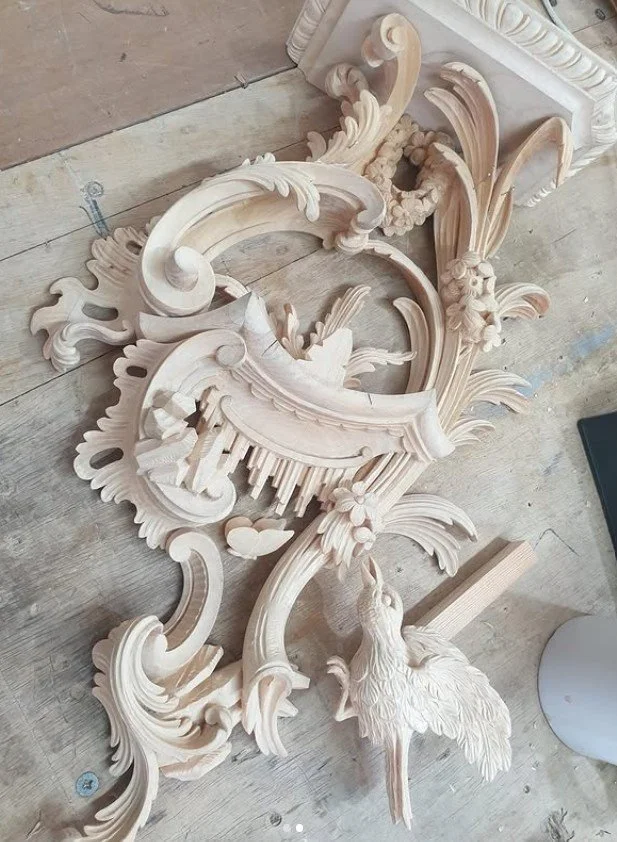

Traditional Wood Carving in Antique Restoration
Preserving the Craftsmanship of the Past
Wood carving has long been one of the defining features of fine antique furniture. From the bold acanthus leaves of Georgian mirrors to the delicate floral garlands of Victorian cabinets, carved decoration tells the story of the skill and artistry of the original maker. When these intricate details become damaged through age, accident or previous poor repairs, sympathetic restoration is essential to preserve both the beauty and historical integrity of the piece.
At Butler & Castell, we believe that successful restoration should be as invisible as possible. Rather than replacing decorative elements with modern reproductions, we carefully recreate missing or damaged carvings using traditional hand tools and techniques, ensuring they blend seamlessly with the original work.
Understanding the Original Craftsmanship
Every period of furniture has its own distinctive carving style. Oak furniture from the seventeenth century often features bold, deeply cut motifs, while eighteenth-century mahogany furniture displays refined scrolls, shells and foliate designs. Victorian furniture introduced increasingly elaborate decorative carving, often inspired by Gothic and Renaissance architecture.
Before any restoration begins, we carefully examine the surviving carving to understand how it was originally made. Tool marks, timber selection, carving depth and surface finish all provide valuable information that guides the restoration process.
Hand-Carved Repairs
Whenever possible, replacement carvings are created entirely by hand using traditional carving chisels and gouges. Working in matching timber allows new sections to move naturally alongside the original wood, ensuring stability for generations to come.
Each repair is individually shaped and refined before being carefully fitted into place. Once secured, the new carving is blended with the surrounding surface through careful finishing and colouring, allowing the repair to become visually harmonious without compromising the authenticity of the piece.
Matching Timber and Grain
Selecting the correct timber is one of the most important stages of any carving restoration. The grain, density and colour of the replacement wood must closely match the original if the repair is to remain discreet after finishing.
Where possible, we source period or reclaimed timber, allowing the repaired area to age naturally alongside the surrounding material.
Conservation Rather Than Replacement
Our philosophy is always to retain as much original material as possible. Missing elements are replaced only where necessary, while damaged carving is stabilised and conserved wherever it can be preserved.
This approach respects the history of each object while ensuring it remains structurally sound and visually complete for future generations.
Traditional Finishing Techniques
Once carving repairs have been completed, the restored area is carefully coloured and finished to integrate with the surrounding surface. This may involve traditional staining, shellac polishing, wax finishing or other period-appropriate techniques depending upon the age and character of the furniture.
The objective is never to make a piece appear new, but to restore harmony while preserving the natural patina that gives antique furniture its unique character.
Commissioning Carving Restoration
Whether a treasured family heirloom has suffered accidental damage or a decorative antique requires sympathetic restoration before sale or display, professional wood carving can return missing detail while respecting the craftsmanship of the original maker.
At Butler & Castell, every restoration is approached with patience, traditional skills and an understanding of historic furniture construction. Our aim is always to preserve the character, integrity and beauty of every piece entrusted to our workshop.
If you have an antique with damaged or missing carved details, we would be pleased to discuss the most appropriate restoration or conservation approach and provide expert advice on its care.